It is an indispensable measure for the majority of residences to have an air source heat pump in the UK. Customers want pure heat, lowered costs, and an eco-friendly living. Many homeowners also explore options like the Air Source Heat Pump Grants to make installation more affordable. Nevertheless, one question that is one among the first the general public raises is the timeframe. How long will this take? The answer is reliant on several aspects.
The size of your home matters. The design of your system matters too. Every home is different, so the time is not always the same. Still, we can look at common steps. These steps give a clear idea of what to expect when fitting a heat pump.
The First Step: The Survey
Before work begins, there must be a survey. An installer will visit your home. They will check your insulation and available space for the unit. They will also look at your radiators and pipework. This is key for planning. A proper survey can take a few hours, based on your property size and various other factors.
After that, the installer creates a plan. This plan is needed before the system goes in. Without it, the job may face delays later. The survey helps reduce mistakes. It also helps give a better idea of the costs estimation.
Estimated Time: 1 – 3 hours
Preparing the Home
Preparation is another stage that takes time. Sometimes the heating system needs changes. You may need new radiators. Old pipework may need replacing. In some homes, extra insulation is needed.
These jobs can add more time from a few hours to some days. In other homes, very little time is needed. If no upgrades are required, the job is faster. But if changes are needed, you must plan ahead. Good preparation helps the heat pump run better. It also saves energy in the long run.
Estimated Time: 0 – 2 days
The Outdoor Unit
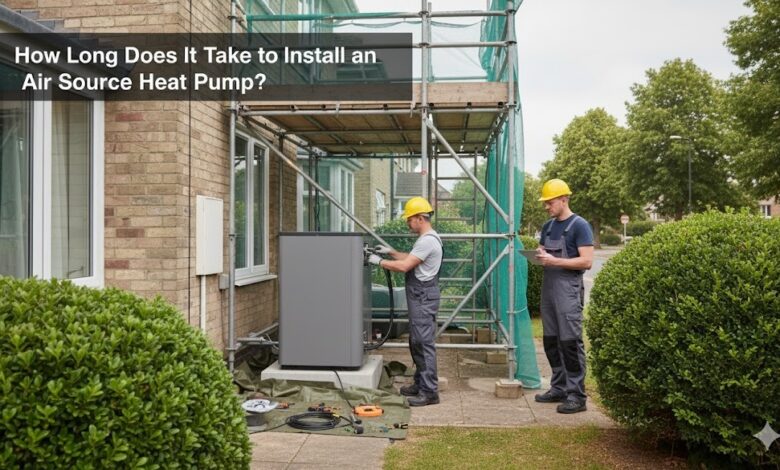
The heat pump has a main outdoor unit. This is the part that pulls heat from the air. Fitting the outdoor unit can be quick. It often takes less than a day. The unit needs a firm base, such as concrete or slabs.
It must be placed in a spot with good airflow. Installers will also need access for pipework. The outdoor unit connects to the indoor system. Getting the location right is very important. Once fitted, it should last for many years.
Estimated Time: 2 – 3 hours
The Indoor Work
The indoor work is where more time is spent. Installers connect the pump to your heating system. They fit pipes between the outdoor and indoor units. They may fit a hot water cylinder if one is needed. This part can take one or two days, based on the size and complexity.
If the home is large, it may take longer. If new radiators or underfloor heating are added, that adds time. The exact length depends on your home layout. Small homes may be done quicker. Large homes often need more work.
Estimated Time: 1 – 2 days
Testing and Checks
After fitting, the system needs testing. Installers check for leaks. They check the pressure. They make sure the system runs well. This testing phase can take a few hours. But it is a vital part of the job.
Without the post installation testing, problems may appear later. The installer will also explain how to use the system. You will learn how to set the controls. You will learn how to get the best heat. This step helps you feel confident with your new pump.
Estimated Time: 1 – 2 hours
The Ultimate Timeline In Total
So how long does it usually take overall? For most homes, the full job takes three to five days. Some smaller jobs may be done in two days. Larger homes, or homes needing upgrades, may take a week.
Every home is unique, so times vary. But most UK households should expect less than a week. Planning and good surveys keep the work smooth. Delays are rare if the installer prepares well.
| Property Size | With Additional Home Preparing Installation | Without Additional Home Preparating for Installation |
| Small | 3 Days | 2 Days |
| Medium | 4 to 5 Days | 3 Days |
| Large | Up to 7 Days | Up to 4 Days |
Factors That Affect Installation Time
Several factors can change how long your air source heat pump installation takes:
- Home size: Larger homes often need more radiators or longer pipework.
- System type: Some systems heat both air and water, which takes more time.
- Age of the property: Older properties will need better insulation or electrical installations.
- Weather: Rainfall or frost may occasionally slow up work done outdoors.
- Installer availability: There are some strong demand areas where one needs to wait longer.
Understanding them makes you better able to plan and have reasonable expectations.
Other Factors
Several things can slow down the job. Poor access can add time. Old heating systems may need more work. If the installer needs special parts, that may cause a pause. Planning for these factors is wise. Always ask your installer about possible delays. Clear communication makes the job easier. It also gives you peace of mind.
Living with the Installation
Many people ask if they can stay home during fitting. The answer is yes. You can usually stay at home while the work is done. There may be short times without heat or hot water. But the installer will plan this with you. Most households find the work not too disruptive. It is less messy than some other heating jobs. Once done, you have clean heat and hot water for years.
How Much Installation Time Required If Apply for Grants
If you are eligible for air source heat pump grants, and you have fulfilled all the requirements, you can expect 3 working days after your home survey to have the heat pump installed. Your heating system installer will take care of all the processes. A good installer will do the job much earlier than others. If your required documents are not verified, the installation may take even weeks if not months.
Final Thoughts
An air source heat pump is a big change for your home. But the time needed is not as long as many fear. Most homes in the UK can have a system fitted in less than a week. The process is clear, with steps that follow in order. First, the survey. Then, the preparation. Next, fitting the outdoor and indoor parts. Finally, the testing. Good planning makes all the difference, especially when exploring options like Heat Pump Grants. If you know what to expect, the job feels much easier.